A Long-Term Solution for Controlling Groundwater
Water intrusion is one of the most common challenges homeowners face, especially in areas with heavy rainfall, poor soil drainage, or properties built on slopes. Excess groundwater can create a variety of issues, including flooded basements, foundation damage, soil erosion, and standing water in yards. One effective solution for controlling groundwater is the installation of a curtain drain.
A curtain drain is a specialized drainage system designed to redirect groundwater away from problem areas before it reaches your home’s foundation or causes damage to your landscape. By collecting and moving excess water through a perforated drainage pipe, curtain drains provide a long-term solution for properties that struggle with moisture issues.
What Is a Curtain Drain?
Curtain drains are typically installed underground in locations where groundwater consistently moves toward a home or other problem area. They are particularly useful on sloped properties, along the uphill side of a home, near retaining walls, and in areas with poor natural drainage.
The system creates an underground drainage barrier that intercepts groundwater before it can saturate the soil around a foundation or collect in unwanted areas of the property. Depending on the property’s layout and drainage needs, a curtain drain may be designed to protect a specific area or redirect water across a larger section of the landscape.
How Does a Curtain Drain Work?
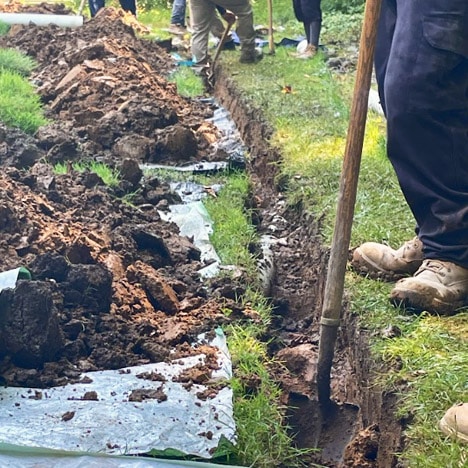
A curtain drain works by creating an underground path of least resistance for groundwater. As water moves through the surrounding soil, it reaches the gravel-filled trench, where it can flow more easily toward the perforated pipe. The pipe collects the water and directs it away from the area being protected.
The system’s effectiveness depends heavily on proper placement, grading, pipe slope, and drainage capacity. The collected water must have a safe place to discharge, such as a suitable lower area of the property, dry well, or approved drainage system. When properly designed and installed, a curtain drain can reduce the amount of groundwater that reaches a home’s foundation and help keep surrounding soil drier.
Contact Us Today by filling out the form below, or calling us at 1-610-241-7009

Signs Your Property May Need a Curtain Drain
Many homeowners do not realize they have a groundwater problem until they begin noticing signs of moisture damage. Some common indicators that a curtain drain may be needed include:
- Water pooling in the yard after heavy rain
- A wet or muddy area that never seems to dry
- Basement leaks or damp walls
- Water collecting near the foundation
- Mold or mildew growth caused by excess moisture
- Erosion along sloped areas of the property
- Poor drainage around landscaping or hardscaping
Properties located at the bottom of a slope are especially vulnerable because water naturally moves downhill and can collect near foundations, patios, driveways, and other structures.
Professional Curtain Drain Installation
While curtain drains may seem simple, proper installation requires careful planning. The drain must be placed at the correct depth and slope to effectively move water away from the problem area. Improper installation can result in poor drainage performance, recurring water issues, or premature system failure.
A drainage professional can evaluate your property, identify the source of excess water, and recommend the best solution. Factors such as soil type, grading, groundwater levels, and existing drainage systems all play an important role in designing an effective curtain drain.
Benefits of Installing a Curtain Drain
A properly installed curtain drain offers several advantages for homeowners dealing with drainage problems.
Protects Your Foundation: Excess groundwater around your foundation can create hydrostatic pressure, which may contribute to cracks, leaks, and structural issues over time. By redirecting water away from your home, a curtain drain can help reduce moisture exposure and protect your foundation.
Prevents Basement Water Problems: Basement flooding and moisture issues often occur because groundwater finds a path through foundation walls or floors. A curtain drain can help intercept water before it reaches your basement, helping keep your lower level drier.
Reduces Yard Flooding: Standing water can damage grass, plants, and landscaping while making outdoor spaces difficult to use. Curtain drains improve drainage by moving excess water away from low-lying areas.
Helps Prevent Soil Erosion: When water continuously flows across your property, it can wash away soil and damage landscaping features. A curtain drain helps control water movement and reduces erosion caused by uncontrolled runoff.
Provides a Long-Term Drainage Solution: When properly designed and installed, curtain drains can provide years of reliable drainage performance with minimal maintenance compared to temporary solutions like surface channels or frequent water removal.

Curtain Drains vs. French Drains
Curtain drains and French drains are similar because both use perforated piping and gravel to move water underground. However, their applications are slightly different. A French drain is commonly installed near a foundation to collect groundwater and prevent basement moisture problems. Curtain drains are typically installed farther away from structures to intercept groundwater before it reaches a specific area.
For example, a homeowner with a sloped yard may install a curtain drain near the top of the slope to capture water before it travels toward the house. A French drain, on the other hand, may be installed directly around the foundation to manage water already affecting the structure.
Determining which drainage system is best depends on your property’s layout, soil conditions, and the source of the water problem.
Financing Offers Available
0% Financing Available With Approved Credit, Affordable Monthly Payment Options, And Fast Pre-Qualification That Doesn’t Affect Your Credit Score. Start Your Application Today.
Contact AWS for Curtain Drain Installation
If your property suffers from standing water, poor drainage, or groundwater issues, a curtain drain may provide the reliable protection you need. AWS specializes in custom drainage solutions designed to help homeowners manage water problems and protect their properties from moisture damage. Contact AWS today to get a quote for professional curtain drain installation and find the right drainage solution for your home.