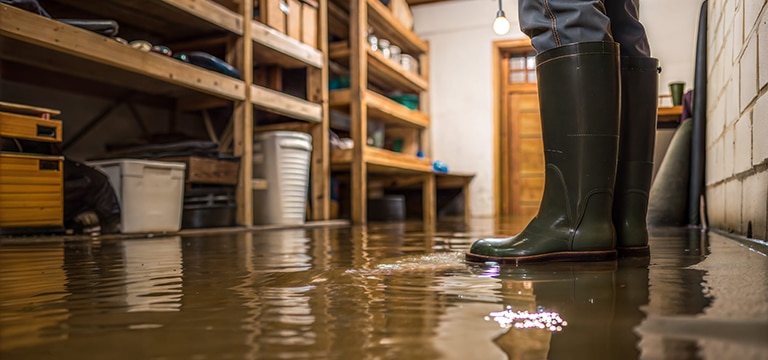
Basement flooding is often associated with heavy rain, overflowing gutters, or drainage problems around the home. However, there are situations where water can enter a basement even when there is no obvious surface runoff. One possible cause is a high water table.
The water table is the level below the ground where the soil becomes saturated with groundwater. Its depth can change based on rainfall, soil conditions, seasonal patterns, and other factors. When the water table rises close to or above the level of a home’s foundation, groundwater can place increased pressure on basement walls and floors and potentially find its way inside.
At AWS, we understand that basement water problems are not always caused by what is happening on the surface. Identifying whether groundwater is contributing to the problem is an important part of determining the right long-term solution.
What Is a Water Table?
The water table is the boundary between soil that contains relatively little groundwater and soil that is fully saturated. Its depth varies from one property to another and can change throughout the year.
Several factors can affect where the water table sits beneath a property. Seasonal groundwater movement, soil composition, nearby bodies of water, drainage conditions, and extended periods of precipitation can all influence groundwater levels. Some properties naturally have a higher water table than others, particularly in areas with poorly draining or frequently saturated soils.
When groundwater rises around a home’s foundation, it can create hydrostatic pressure against the basement walls and floor. If there are cracks, joints, porous concrete, or other points of weakness, water may eventually enter the basement.
How Can a High Water Table Cause Basement Flooding?
A high water table can cause basement flooding in several ways. As groundwater levels rise, water pressure around the foundation increases. That pressure can force water through existing cracks and gaps in the foundation.
Groundwater can also move upward through basement floors. Concrete is not completely waterproof, and water may seep through cracks, joints, or other areas where the floor meets the foundation walls.
In some homes, the drainage system surrounding the foundation may become overwhelmed when groundwater levels rise. If a footing drain or sump pump system cannot keep up with the amount of incoming water, groundwater can eventually make its way into the basement.
Signs a High Water Table May Be Affecting Your Basement
A high water table may be contributing to basement flooding if you notice certain patterns. For example, water may appear during or shortly after periods of prolonged rain and then disappear as groundwater levels fall. You may also notice moisture coming through the basement floor rather than only through walls or windows.
Other warning signs can include:
- Water or dampness around the floor-wall joint
- Seepage through basement floor cracks
- A sump pump that runs frequently during wet periods
- Water entering despite properly functioning gutters and downspouts
- Recurring basement moisture during certain seasons
These signs do not automatically mean a high water table is the cause. Surface drainage, foundation issues, plumbing leaks, and other sources can produce similar symptoms.
Can You Prevent Basement Flooding From Groundwater?
The best approach depends on how groundwater is affecting the property. Improving drainage around the foundation can help direct surface water away from the home, while a properly functioning sump pump can remove groundwater that reaches the drainage system.
In some cases, interior or exterior waterproofing may also be appropriate. A professional evaluation can help determine where the water is coming from and which combination of drainage or waterproofing measures makes sense for the property. The goal should be to manage water before it becomes a recurring basement problem rather than simply cleaning up after each flooding event.
When Should You Call AWS?
If your basement repeatedly takes on water during wet periods, even when your gutters and downspouts appear to be working properly, it is worth having the problem evaluated. A high water table may be contributing to the issue, but determining the actual source is essential before selecting a solution.
AWS can evaluate basement moisture and drainage concerns and help identify potential sources of water intrusion. Whether the problem involves groundwater, foundation seepage, drainage, or another issue, addressing the source can help reduce the risk of recurring basement flooding.
Protect Your Basement With Help From AWS
A high water table can put significant pressure on a home’s foundation and contribute to basement flooding, but recurring water intrusion does not have to be something you simply live with. The right drainage or waterproofing solution can help manage groundwater and protect your basement.
If you are dealing with recurring basement flooding or moisture, contact AWS online to learn more about solutions for managing groundwater and keeping your basement dry.